

In modern eCommerce, most shoppers do not buy on their first visit. They browse, compare, and return later when the timing or price feels right. Without a wishlist feature, those shoppers often forget products they liked and never return. Adding a wishlist plugin solves this gap by turning casual browsing into measurable buying intent.
Wishlists Turn Browsing Into Future Purchases
A wishlist lets customers save products they want but are not ready to buy yet. This simple action dramatically improves conversion paths because shoppers can easily find saved items when they return. Studies of WooCommerce wishlists show that allowing customers to save and manage products encourages repeat visits and increases sales opportunities.
Customers also tend to revisit saved products multiple times before purchase. If they cannot easily find them again, stores lose potential sales.
A wishlist effectively becomes a persistent “intent list” that keeps products top-of-mind until the buyer is ready.
A Wishlist Improves User Experience and Loyalty
Online shoppers expect flexibility. They want to browse freely, compare options, and plan purchases without pressure. Wishlists provide exactly that by letting customers:
- save items for later
- organize favorites into lists
- track prices and availability
- return instantly to products they liked
These capabilities make shopping easier and more personalized, which increases engagement and loyalty.
When shoppers feel in control of their journey, they stay longer and return more often.
Wishlists Create Viral Growth Through Sharing and Gifting
Wishlists are inherently social. Customers share lists with friends and family for birthdays, holidays, or special occasions. That sharing introduces new visitors to your store with built-in purchase intent.
Shared wishlists are proven to expand reach and bring new customers because they expose products to wider audiences.
This is especially powerful when combined with gifting features, where others can purchase items directly from someone’s list.
Wishlists Provide High-Value Marketing Data
From a store owner’s perspective, wishlists are one of the strongest signals of customer intent. They reveal exactly which products shoppers want, even if they have not purchased yet.
- With wishlist data, stores can:
- identify popular products
- plan stock and promotions
- send targeted campaigns
- trigger price-drop or restock alerts
Tracking wishlist behavior allows personalized marketing that converts far better than generic promotions.
This turns wishlists into a conversion and analytics engine, not just a convenience feature.
Why WooWish Goes Beyond Traditional Wishlists
While basic wishlist plugins provide saving and sharing, WooWish extends the concept into a complete social buying and gifting system.
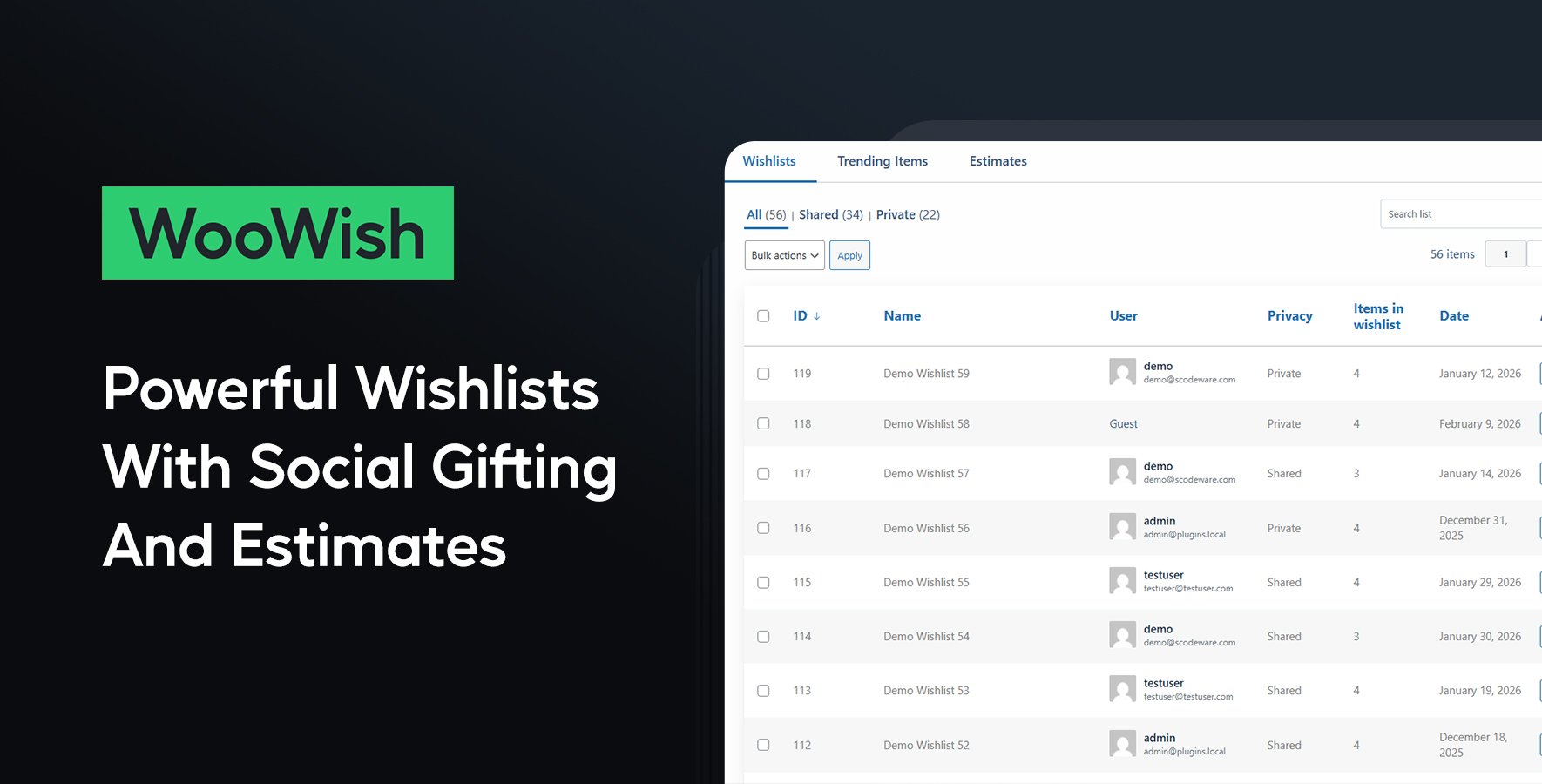
WooWish enhances the standard wishlist model with features designed specifically to increase engagement and conversions.
Multi-List and Social Wishlist Experience
WooWish allows customers to create multiple wishlists, manage them, and share them publicly or privately. Multi-list capability is widely recognized as a key wishlist feature because it lets shoppers organize products by occasion or intent.
This mirrors real-world shopping behavior such as:
- birthday lists
- home projects
- future purchases
- gift ideas
Organized lists keep customers connected to your store over time.
Gifting and Collaborative Buying
Unlike standard wishlist plugins, WooWish supports gifting workflows where other users can purchase items from someone’s list. This transforms wishlists into gift registries and collaborative shopping spaces.
Gifting features leverage the same social sharing effect that drives traffic and new buyers through wishlist exposure.
The result is additional orders that would not exist in a traditional single-buyer flow.
Estimate Requests and Purchase Intent Signals
WooWish also introduces estimate or quote requests directly from wishlist items. Request-for-estimate functionality is known to increase conversions because it captures interest from customers who need pricing clarity before purchasing.
This is especially valuable for:
- custom products
- bulk orders
- B2B or high-value items
Instead of losing uncertain buyers, WooWish converts them into leads.
Notifications That Bring Buyers Back
Wishlist notifications such as price-drop or back-in-stock alerts are proven to drive return visits and purchases because they target products customers already want.
WooWish integrates these triggers directly into the wishlist experience, turning saved items into automated conversion events.
Marketing and Analytics From Real Intent
Wishlist analytics reveal which products customers desire most. Stores can use this data for campaigns, promotions, and merchandising strategies. Wishlist insights are widely considered valuable because they show interest before purchase.
WooWish connects this intent data directly to marketing workflows, helping transform saved products into orders.
The Competitive Advantage of Having a Wishlist Plugin
Stores without wishlists force customers to remember products themselves. Stores with wishlists keep customers connected to products, campaigns, and social sharing loops.
A well-implemented wishlist plugin delivers:
- higher conversion rates
- repeat visits
- social traffic
- stronger customer loyalty
- actionable marketing data
These benefits explain why wishlists are considered a core feature of successful eCommerce sites.
Conclusion
A wishlist plugin is no longer optional for WooCommerce stores. It is a foundational engagement and conversion tool that bridges the gap between browsing and buying.
WooWish elevates this concept by combining wishlists, gifting, collaboration, estimates, notifications, and analytics into a unified system. Instead of simply letting customers save products, it turns wishlists into a social commerce engine that drives repeat visits, new customers, and real sales.
For WooCommerce stores focused on growth, adding WooWish is not just a UX improvement. It is a strategic upgrade to how customers discover, share, and purchase products.
Comments (0)